Darcy
Happiness for BeginnersDarcy is a former close friend of Helen whose reunion with her comes amid a bar mitzvah crisis. In a lavender suit, juggling a failed search for a replacement and then urging Helen to rescue the party, Darcy appears at once as a harried parent and as the friend Helen remembers from their teenage dance nights. Her apology acknowledges past harm, but Helen’s response makes clear that their history is not settled by a hug.
Reunion and an old wound
Darcy arrives while trying to find a replacement for someone with stomach flu. She has spent twenty minutes on the phone, and when she ends the call she reports that everyone is booked throughout the city. Her frustration is sharpened by the feeling that the shortage was predictable. The practical emergency introduces her before Helen can: Darcy is trying to manage the event, and the absence of a replacement is already weighing on her.
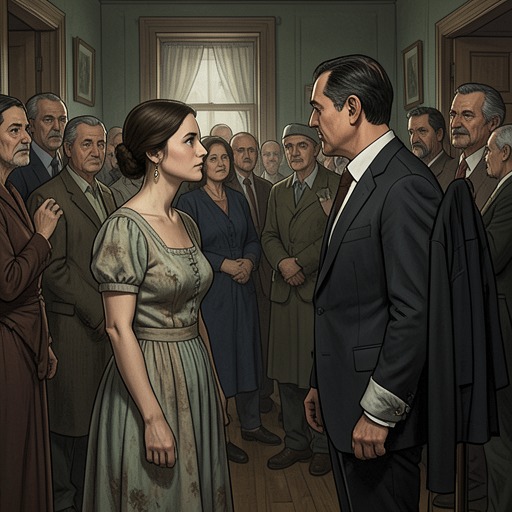
When David Hoffman points out that Helen is there, Darcy first looks at Duncan without recognizing him, then recognizes Helen and comes in for a hug. Helen hugs her back, but describes the embrace as merely fine; Darcy, meanwhile, holds on and says she is glad Helen made it. The unequal emphasis matters. The reunion is affectionate, yet Helen’s restrained response signals that time together has not erased what happened between them.
Darcy apologizes for David’s behavior toward Helen in high school, saying she is sorry he was such a jerk to her. Helen’s memory complicates the apology: the hurt had felt more like a betrayal by Darcy, because she had expected more from a girlfriend than from a boyfriend. She tells Darcy that David was not the only one. Darcy answers collectively, saying that they still feel terrible and would like to take Helen to lunch to apologize properly. Helen hears the “we” as somewhat passive-aggressive. The offer therefore opens a door without resolving the account of who caused the deeper injury: Darcy speaks for the former couple, while Helen distinguishes the friend’s betrayal from the boyfriend’s conduct.
The bar mitzvah emergency
The gathering itself is failing to bring its guests together. Helen sees a room split between seventh graders and elderly people, with an empty dance floor beneath a spinning disco ball and flashing string lights. The children are carefully dressed in suits and dresses, including clip-on ties and patent-leather Mary Janes, but the decor and effort have not produced a dance. Helen finds the scene painfully awkward and feels sorry for the young guests. Her suggestion that Darcy might motivate them follows from Darcy’s reputation as a good dancer, not from a plan already in motion.
Darcy refuses because she is the child’s mother and expects a mother dancing to be mortifying to the child. Her response reveals the constraint she feels: the person Helen thinks could enliven the room is, in Darcy’s view, precisely the person least able to do so without embarrassing her child. The obstacle is not a lack of music or dancing ability, but the social distance between a parent and the seventh graders she hopes to get onto the floor.
An appeal to their shared past
When Helen says she does not want payment, David Hoffman points out that the fee is three hundred dollars. Darcy offers to double it, jumping up and down as she pleads with Helen to save what she calls the worst bar mitzvah ever. The sudden physical excitement changes Helen’s view of her: for a moment Darcy again resembles the friend Helen loved years earlier. Yet Helen remains uneasy. She knows she can dance with friends when relaxed, but not necessarily in a room full of strangers, and feels her habitual shyness closing in.
Darcy counters that hesitation not with a new argument about the guests but with a memory they share. She recalls the dance parties they held in tenth grade, turning up music in the attic playroom and going wild. She asks Helen to recover what that felt like, placing their teenage freedom against the adult present: in the nineties, real life still seemed far away, even when Darcy’s father banged on the attic floor with his nine iron to make them quiet down. The remembered parties give her appeal its force. She is asking Helen not simply to perform, but to act from a version of their friendship that existed before the present hurt and the responsibilities of adulthood.
Character and narrative role
Darcy is shown through a compact series of contrasts: she is anxious about the staffing failure but exuberant when she recognizes Helen’s ability; she insists a mother cannot dance without humiliating her child, yet jumps up and down when the party’s rescue seems possible. Her apology is affectionate but incomplete from Helen’s perspective, and her recollection of their tenth-grade parties offers reconnection without pretending that the old betrayal has disappeared.
In this encounter, Darcy becomes the person who asks Helen to step past her shyness and use a talent she associates with trusted company. The scene ties that request to their shared history, so the dance-floor problem also tests whether Helen and Darcy can recover any part of their former ease. The evidence ends with Darcy making the appeal; it does not establish whether Helen accepts or how the bar mitzvah turns out.